

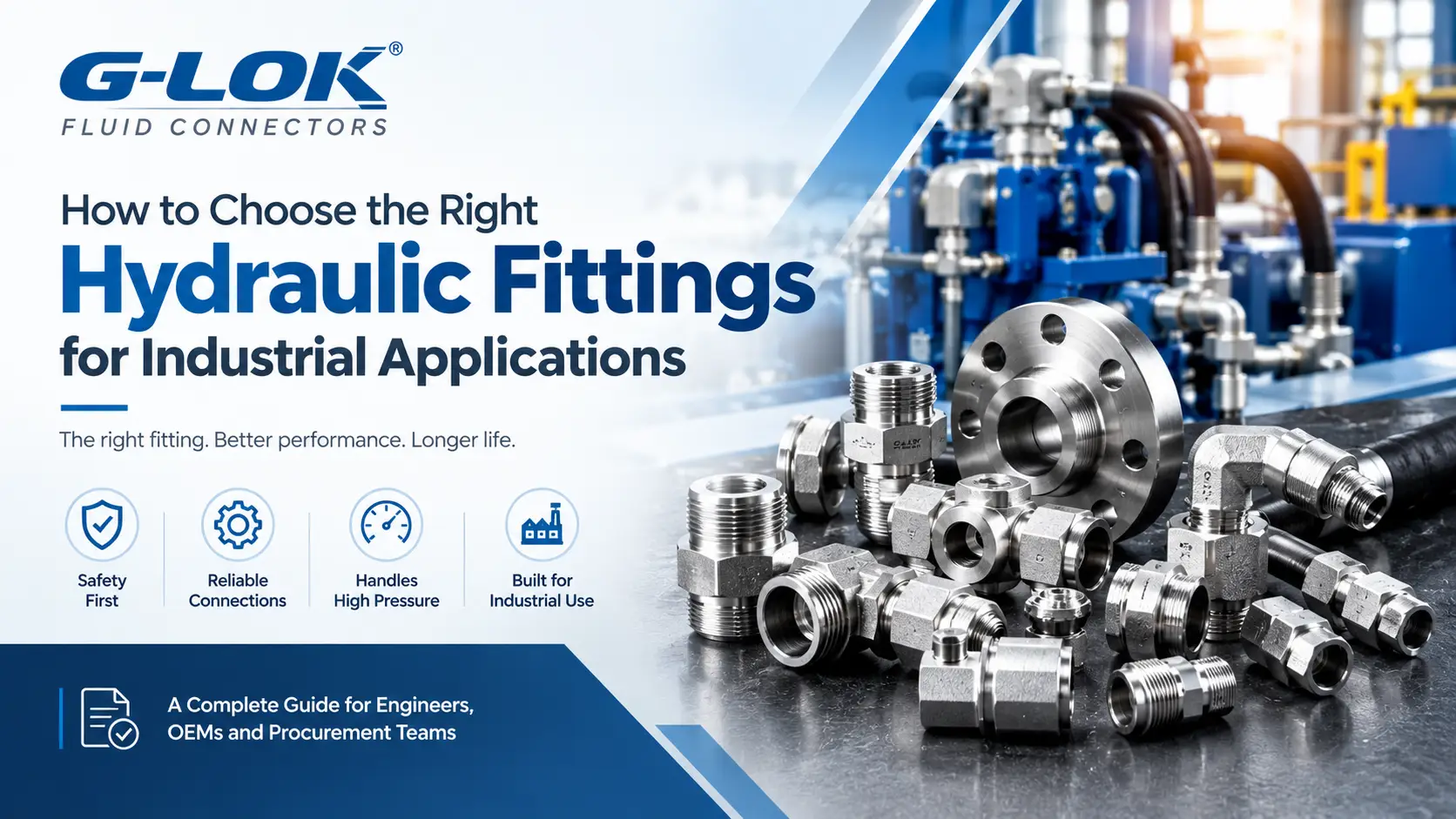
Choosing the right hydraulic fittings for industrial applications is essential for maintaining safe, reliable, and efficient fluid power systems. The correct fitting helps create a secure connection between hydraulic hoses, tubes, pipes, valves, and other system components while reducing the risk of leakage, pressure loss, and unexpected downtime.
Industrial hydraulic systems operate under different pressure levels, temperatures, vibration conditions, and environmental demands. Therefore, selecting a fitting requires more than matching the connection size. Buyers must consider operating pressure, fitting material, thread type, sealing method, compatibility, and applicable industry standards.
In this guide, we explain how to choose hydraulic fittings for industrial applications, the different types available, and the important factors engineers, OEMs, and procurement professionals should evaluate before purchasing.
What Are Hydraulic Fittings?
Hydraulic fittings are mechanical connection components used to join hoses, tubes, pipes, valves, pumps, cylinders, and other parts of a hydraulic system. They help maintain a secure fluid path and support the transfer of hydraulic fluid under the system’s specified operating conditions.
Depending on the application, hydraulic fittings may use threaded connections, compression mechanisms, flanges, or other sealing arrangements. They are commonly used in construction machinery, agricultural equipment, industrial manufacturing systems, material-handling equipment, and hydraulic power units.
Selecting the right hydraulic fitting helps maintain connection integrity, simplify maintenance, and improve the overall reliability of industrial equipment.
How to Choose the Right Hydraulic Fittings for Industrial Applications
When choosing hydraulic fittings, evaluate the complete operating environment rather than relying on a single specification. The following factors can help you identify a suitable connection for your equipment.
1. Understand the Operating Pressure
Operating pressure is one of the most important considerations when selecting hydraulic fittings. A fitting must be suitable for the system’s maximum expected working pressure, including pressure fluctuations and transient conditions.
Consider the following before making a selection:
- Normal operating pressure and maximum pressure.
- Pressure spikes during machine operation.
- The pressure ratings of the hose, tube, fitting, and connected components.
- The manufacturer’s specifications and applicable standards.
The complete connection assembly must be rated for the intended operating conditions. Selecting a fitting based only on its nominal size or material can create safety and reliability risks.
2. Select the Correct Fitting Type
Different industrial applications require different hydraulic connection designs. Understanding the main types of hydraulic fittings helps simplify product selection.
Hydraulic tube fittings: These fittings connect rigid hydraulic tubes and are widely used in industrial machinery and fluid power systems. DIN 2353 metric tube fittings are commonly selected for applications requiring standardized tube connections.
Hydraulic hose fittings: These connect flexible hydraulic hoses to equipment, valves, pumps, and other system components. The fitting must be compatible with the hose construction, connection interface, and operating pressure.
SAE hydraulic flanges: Flange connections are used in many hydraulic systems, particularly where secure connections are needed for larger flow paths or demanding operating conditions. The applicable flange standard, size, pressure class, and sealing arrangement must be verified.
Flare fittings: These use a flared tube end and a compatible mating connection to create a seal. Correct geometry and compatibility are important for reliable performance.
One-piece flange adapters: These integrate the flange and adapter into a single component. Depending on the system design, they can simplify assembly and reduce the number of separate connection interfaces.
The most suitable option depends on the equipment design, connection requirements, working pressure, and manufacturer’s specifications.
3. Check Thread Type and Connection Compatibility
Thread compatibility is critical when selecting hydraulic fittings. Two fittings may appear similar but use different thread forms, sealing arrangements, or dimensional standards.
Common thread types and connection systems include:
- BSP threads
- NPT threads
- Metric threads
- JIC connections
- ORFS connections
BSP and NPT threads, for example, have different thread geometries and should not be treated as interchangeable simply because their dimensions appear similar. Some connections seal through threads, while others rely on a flare, O-ring, or dedicated sealing surface.
Before ordering hydraulic fittings, confirm the thread designation, thread size, pitch, sealing method, and mating component specifications. Thread gauges and manufacturer drawings can help identify the correct connection.
4. Choose the Right Material
Hydraulic fitting materials affect corrosion resistance, mechanical properties, durability, and suitability for the operating environment.
Carbon steel: Commonly used in industrial hydraulic applications where strength, cost, and appropriate surface protection are important considerations.
Stainless steel: Often preferred for applications requiring improved corrosion resistance, including certain chemical processing, marine, food-processing, and outdoor environments. The appropriate stainless steel grade depends on the specific exposure and operating conditions.
Other materials: Certain applications may require specialized alloys or materials to meet specific chemical, temperature, or performance requirements.
When comparing hydraulic fitting materials, evaluate the hydraulic fluid, external environment, temperature, corrosion exposure, mechanical requirements, and applicable specifications. Material selection should be based on the complete application rather than price alone.
5. Consider Temperature and Environmental Conditions
Hydraulic systems may operate in hot industrial facilities, cold outdoor environments, dusty construction sites, or areas exposed to moisture and corrosive substances.
Temperature can affect seals, materials, fluid properties, and connection performance. External conditions can also influence corrosion and component life.
When choosing hydraulic fittings, consider:
- Minimum and maximum operating temperatures.
- Hydraulic fluid compatibility.
- Exposure to moisture, chemicals, salt, or contaminants.
- Vibration and mechanical movement.
- Surface coatings and corrosion protection.
Ensure that the fitting, seal, hose, and connected components are suitable for the same operating environment.
6. Verify Applicable Standards and Specifications
Industry standards help define dimensions, connection designs, and performance requirements for hydraulic components. Selecting fittings that comply with the relevant specifications supports compatibility and helps simplify maintenance and replacement.
For example, DIN 2353 and ISO 8434-1 are relevant to metallic 24-degree cone tube connections. SAE J518 and ISO 6162 are associated with specified hydraulic flange connection systems.
However, a standard reference alone does not establish that every fitting is compatible with every other component. Confirm the applicable standard, series, dimensions, pressure rating, and mating connection before purchasing.
Industrial buyers should request technical drawings, product specifications, material details, and supporting documentation where required.
7. Evaluate Installation and Maintenance Requirements
The correct hydraulic fitting should suit the equipment design and the available installation space. Ease of assembly and future maintenance can affect the total cost of operating an industrial hydraulic system.
Evaluate whether the connection requires specialized tools, specific assembly procedures, or controlled tightening. Follow the manufacturer’s installation instructions and use compatible components.
Avoid mixing fitting components from different connection systems unless compatibility has been established. Incorrect assembly, damaged sealing surfaces, or improper tightening can cause leakage and premature failure.
8. Choose a Reliable Hydraulic Fittings Manufacturer
The quality and consistency of hydraulic fittings depend on suitable materials, manufacturing processes, dimensional control, and verification procedures.
When evaluating a hydraulic fittings manufacturer, consider:
- Product range and technical expertise.
- Manufacturing capabilities and customization options.
- Material traceability and quality-control procedures.
- Dimensional inspection and relevant testing facilities.
- Availability of technical documentation and drawings.
- Ability to meet required specifications and delivery schedules.
OEMs, distributors, and industrial procurement teams should evaluate suppliers based on documented capabilities and the requirements of their specific applications.
Common Mistakes to Avoid When Selecting Hydraulic Fittings
Incorrect fitting selection can lead to leakage, equipment downtime, maintenance costs, and potential safety hazards. Avoid these common mistakes:
- Selecting a fitting based only on nominal size without verifying the connection interface.
- Using a fitting with an inadequate pressure or temperature rating.
- Mixing incompatible thread types or sealing systems.
- Ignoring corrosion exposure and hydraulic fluid compatibility.
- Reusing damaged fittings or seals without proper inspection.
- Overlooking installation instructions and tightening requirements.
- Purchasing components without confirming technical specifications.
A systematic selection process helps reduce compatibility issues and supports reliable hydraulic system operation.
Which Hydraulic Fittings Are Best for Different Industrial Applications?
The best hydraulic fitting depends on the system design, operating conditions, and required connection type.
| Industrial application | Fitting type to evaluate | Key selection factor |
| Industrial hydraulic machinery | Hydraulic tube fittings | Tube size, connection standard, pressure |
| Mobile and construction equipment | Hydraulic hose fittings and flange connections | Pressure, vibration, hose compatibility |
| Agricultural machinery | Tube and hose fittings | Environmental exposure and maintenance |
| Hydraulic power units | Tube fittings and flange connections | Flow requirements and connection design |
| Corrosive environments | Suitable stainless steel fittings | Material grade and chemical exposure |
| Industrial piping systems | Socket weld or butt weld fittings, where appropriate | Piping design, material and applicable standard |
This table provides general guidance rather than a universal specification. The correct fitting must be confirmed against the actual system design and manufacturer documentation.
Why Quality Matters in Industrial Hydraulic Fittings
Hydraulic fittings are important components in fluid power systems, and their performance affects connection integrity and equipment reliability. Consistent manufacturing quality, suitable materials, dimensional accuracy, and appropriate inspection procedures help reduce the risk of connection-related problems.
G-LOK provides industrial connection components, including hydraulic tube fittings, SAE flanges, hose fittings, flare fittings, one-piece flange adapters, socket weld fittings, and butt weld fittings. Buyers can evaluate the available product range against their application requirements and request the relevant technical information before selecting components.
When choosing a supplier, verify the specifications, quality documentation, and testing requirements applicable to the product you intend to purchase.
Frequently Asked Questions About Hydraulic Fittings
1. How do I choose the right hydraulic fitting?
Identify the required connection type, operating pressure, temperature range, thread standard, material, sealing method, and application environment. Confirm compatibility with the connected hose, tube, or equipment before ordering.
2. What are the most common types of hydraulic fittings?
Common types include hydraulic tube fittings, hose fittings, flare fittings, threaded adapters, and hydraulic flange connections. The appropriate type depends on the system design and connection requirements.
3. What is the difference between hydraulic tube fittings and hose fittings?
Hydraulic tube fittings connect rigid tubing, while hydraulic hose fittings connect flexible hoses. Each requires a compatible connection interface and suitable pressure rating.
4. Which material is better for hydraulic fittings: carbon steel or stainless steel?
Carbon steel is widely used in industrial systems where suitable strength and surface protection are required. Stainless steel may be preferable in more corrosive environments. The best choice depends on fluid compatibility, exposure, temperature, and mechanical requirements.
5. Why are hydraulic fittings leaking?
Common causes include incompatible connections, damaged seals, incorrect assembly, contaminated or damaged sealing surfaces, excessive pressure, vibration, and improper tightening. Identify the root cause before replacing components.
6. What information should I provide when ordering hydraulic fittings?
Provide the fitting type, connection standard, size, thread designation, material, pressure and temperature requirements, application details, and any relevant technical drawing or part number. This helps the supplier identify a suitable component.
7. Why should industrial buyers choose an experienced hydraulic fittings manufacturer?
An experienced manufacturer may offer established manufacturing processes, product knowledge, inspection capabilities, and technical support. Buyers should verify these capabilities and confirm that the supplier can meet their specific quality and application requirements.


